Regional Fracture Orientations
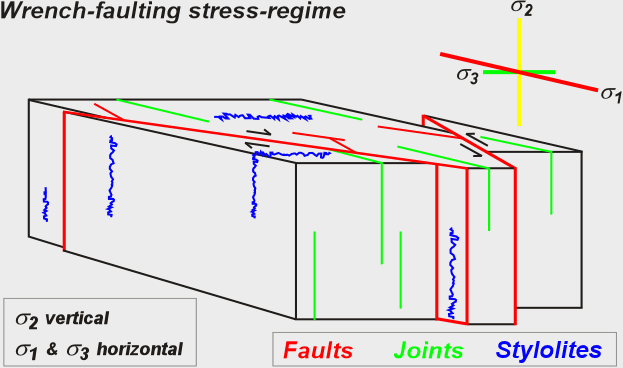
Figures 1, 2 and 3 represent the three most common regional earth stress regimes which are termed the Andersonian stress regimes after the geologist (E.M. Anderson) who first recognized and described them in 1905. In Andersonian regimes one principal stress is vertical so that the other two are horizontal. Be aware that although Andersonian regimes are the most common, inclined stressfields are not unusual. The figures schematically show the average regional orientations in which different types of natural fractures form relative to Andersonian stress regimes.
Figure 1. Normal faulting stress regime.
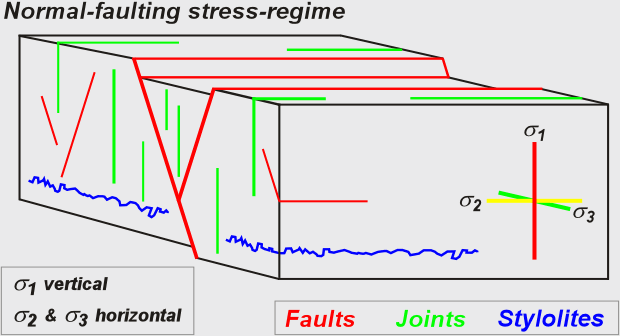
Figure 2. Reverse faulting stress regime.
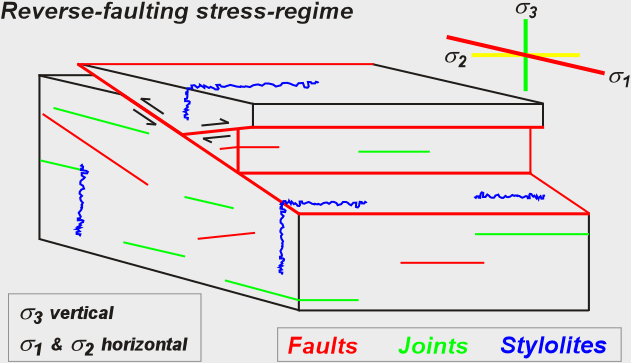
Figure 3. Wrench (strike-slip) faulting stress regime.
Why fracture orientations often differ from present-day stresses
Natural fracture orientations are often unrelated to the orientations of the present-day stresses in a rock mass for the following reasons (Engelder 1992):
- Fracture orientation reflects the orientations of the stresses in the fractured rock at the time of fracture formation.
- Regional stress regimes change through time.
- Most natural fractures formed in the geological past under the influence of paleostresses (ancient stresses) that no longer prevail.
The orientation and density of fracture sets may vary with position in a region of interest because stress regimes vary in space as well as in time even if the regional stress maintains a constant orientation. Local stresses may differ significantly in orientation and/or magnitude from regional stresses due to folding, faulting, lithological differences, diagenesis, pore-pressure variations and other influences. (Engelder 1992). For detail on localized fracturing read the following pages on this website: