Basic fault & fault-slip nomenclature
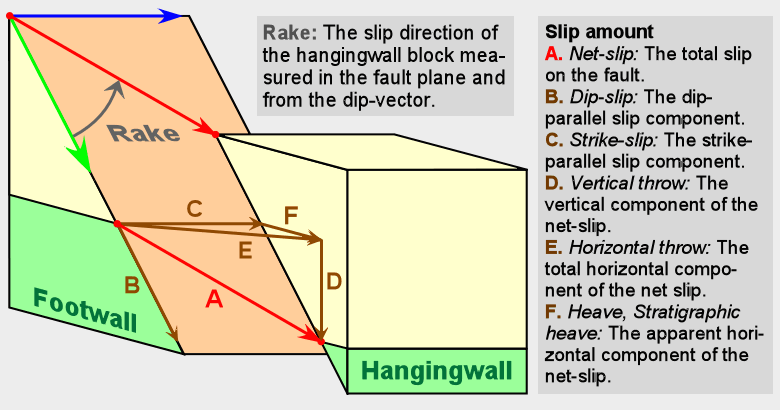
This section reviews basic fault nomenclature. The diagram shows the basic fault-slip parameters. The blue arrow indicates the right-hand rule strike, the green arrow dip. The hangingwall is the fault block above the fault plane; the footwall is the fault block below the fault plane.
Figure 1. Fault slip
Heave and throw
Fault heave and throw can be deceptive because:
- Heave and throw only show one component of fault slip. A fault with a small heave or throw could have a large amount of strike-slip movement.
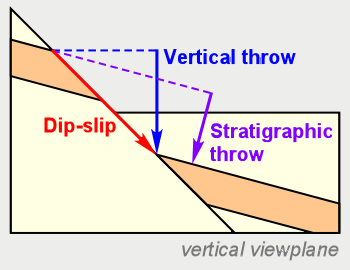
- Vertical throw is very different from stratigraphic throw. This distinction may be very important in directional drilling.
Figure 2. Vertical throw vs. stratigraphic throw
Basic fault names based on slip direction
Basic fault names based on slip direction. Fault names indicate the rake of the movement direction of the hangingwall. Rake is the angle of the hangingwall slip-vector measured in the fault plane from the right-hand-rule strike. Pitch is a synonym of rake. Positive rakes are measured counterclockwise (as seen looking down on the fault plane). Rake can range from +180° to -180°. Figure 3 is drawn looking down on a fault plane. The red line indicates a striation on the fault plane that is parallel to the movement direction. If the hangingwall (the block above the fault plane) moved downwards as indicated by the red arrow, then the rake is -120° and the fault is a right-lateral normal fault. If the block above the fault plane had moved upwards (opposite the direction indicated by the red arrow), then the rake would be +60°.
Right-lateral vs. left-lateral. Imagine that you are standing on one side of a steeply dipping fault as it moves. If objects on the opposite block appear to be moving to your right, then the fault has a right-lateral component. If objects on the opposite block appear to be moving to your left, then the fault has a left-lateral component. The apparent movement is the same whether you are standing on the hangingwall or footwall.
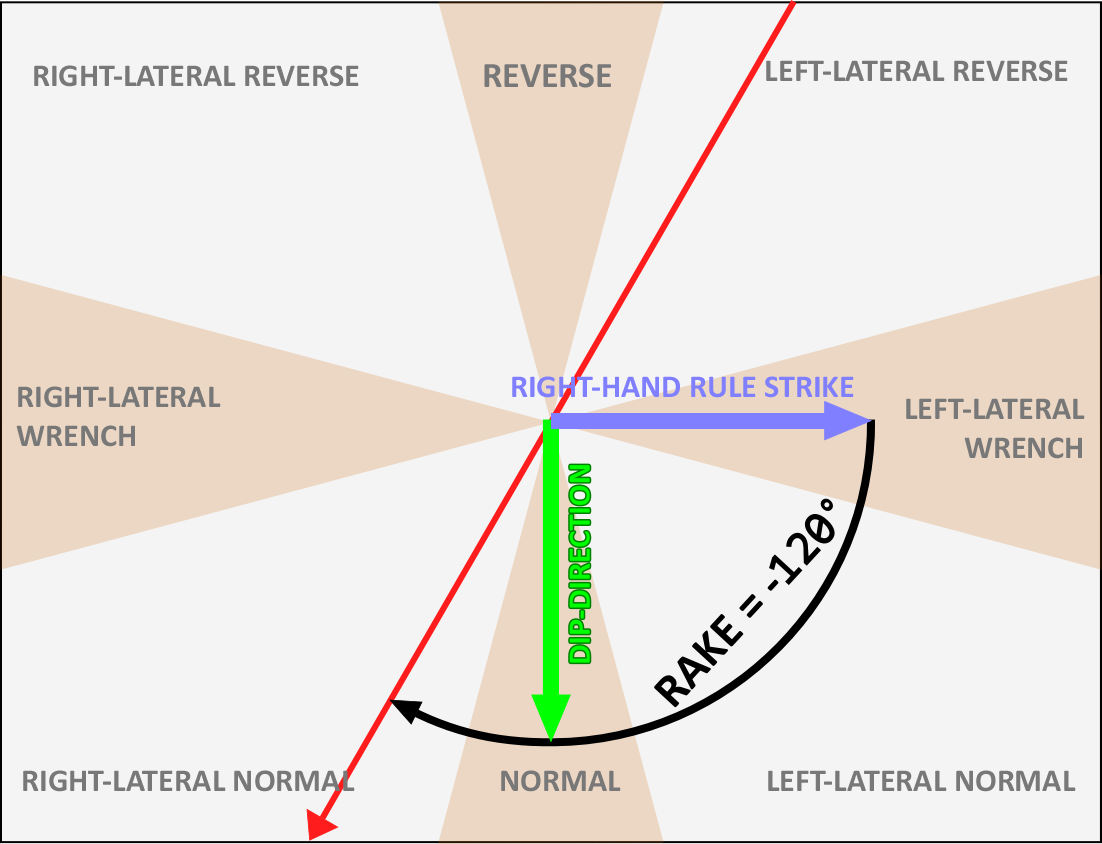
Figure 3. The fault name describes the rake of the slip vector.
Special fault names
Special fault names. Geologists use many different names for special types of faults. These names have complex and far-reaching implications that depend to some extent on the user. When in doubt, use a simple name. Some important types of specialized fault names:
Wrench vs. strike-slip fault. These terms are synonyms and indicate a fault with a slip-vector closely parallel to the fault strike. Some geologists reserve the term wrench for large, regional strike-slip faults, steeply-dipping regional strike-slip faults or as a synonym for tear fault.
Thrust fault. This name once meant any reverse fault with a dip-angle of 30° or less. Now the term indicates faults with an originally low dip-angle that formed during regional compressional deformation. A single thrust fault may change its orientation as it crosscuts different lithologies. Folding can reorient thrusts so that they may have a variety of angles today.
Detachment fault. A regional, low-angle, listric normal fault formed during crustal extension.
Tear fault. Often used to indicate a steeply-dipping wrench fault that bounds or cuts the hangingwall of a thrust or normal fault, also used for mode III faults.